Who This Blog Is For: Anyone across the greater Knoxville area — from the communities near Karns and Powell to the neighborhoods stretching toward Maryville and the foothills of the Smokies — who has been managing neck injury and TMJ dysfunction as two separate stories, when the evidence may point to a single structural chapter that has never been fully read.
Do you remember the accident — the rear-end collision on I-40, the fall during a trail run, the hard hit at a youth sports game — that seemed to resolve on its own, until jaw pain and clicking appeared somewhere down the road? Have you been through dental splints, jaw exercises, and physical therapy that offered some relief but never quite held? Has anyone treating your TMJ ever thought to ask what happened to your neck first?
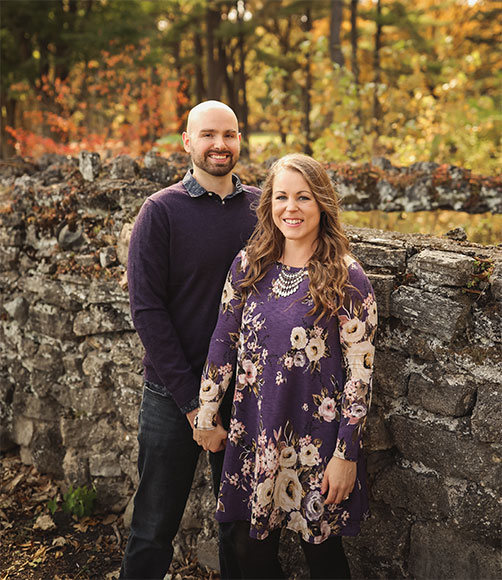
At Transcend Chiropractic, Drs. Leigh and Connor Davis hear this pattern regularly — from professionals, seniors, athletes and a long list of other individuals who absorbed more than a few collisions before settling into their day to day life. Notably, what unites them is not just a TMJ diagnosis. It is a history that includes a neck injury no one thought to connect.
The connection is structural. The explanation is specific. And for many patients across Knox County, hearing it for the first time is the beginning of care that finally holds.
Neck injury and TMJ dysfunction are linked through the atlas, the first upper cervical vertebra.
When a neck injury shifts the atlas from its proper position, the muscles and nerves that support the jaw are drawn into a compensated pattern. Over time, that compensation places uneven pressure on the temporomandibular joint, producing pain, clicking, and restricted jaw movement.
That structural relationship is why TMJ symptoms so often persist through treatments focused entirely on the jaw.
When the atlas shifts — whether from a car accident, a sports collision, or accumulated postural strain — the body compensates automatically to keep the skull level. Muscles along the jaw, neck, and base of the skull are continuously recruited into that compensation. The temporomandibular joint, which depends on balanced muscular tension on both sides to open and close smoothly, is placed under uneven load. Over time, that uneven load produces the grinding, the facial pain, and the restricted jaw movement most patients recognize as TMJ dysfunction.
For many people across Knoxville — from those sitting long hours at screens in the growing business corridors to those whose bodies absorbed years of athletic effort at the fields and courts of West and East Knox County — this is a pattern that began with an injury that seemed to close, and quietly continued in a different form.
Many patients are surprised by how directly atlas misalignment and jaw pain are related — especially when the neck injury happened years or even decades ago. The question Drs. Davis hear most often is: "But I thought that healed." And in many ways, it did. The acute pain resolved. The stiffness settled. Life resumed.
But the atlas, once shifted from its optimal position, does not reliably self-correct.
The temporal bone — the portion of the skull that houses the temporomandibular joint — sits in close structural relationship to the upper cervical vertebrae. The muscles that control jaw movement attach along this same region. The nerves that coordinate jaw mechanics pass through the same anatomical corridor. When the atlas holds a compensated position, all of those neighboring structures adapt around it.
The jaw does not operate in isolation from the neck. What happens at the top of the spine directly shapes the tension, alignment, and range of motion of the jaw. For patients in Knoxville who have been managing TMJ for years while also carrying neck tension they assumed was unrelated — the connection, once explained, tends to land with immediate recognition.
The whiplash and TMJ connection is one of the most consistently overlooked patterns in upper cervical care, and the reason it goes unnoticed has more to do with timing and specialty boundaries than with clinical oversight.
When someone experiences whiplash — in a rear-end collision, a fall along one of the trail systems near the Smokies, a collision during a rec league game — the immediate focus is the neck. Imaging is reviewed. Soft tissue injury is managed. Most acute symptoms resolve within weeks, and the incident is considered closed.
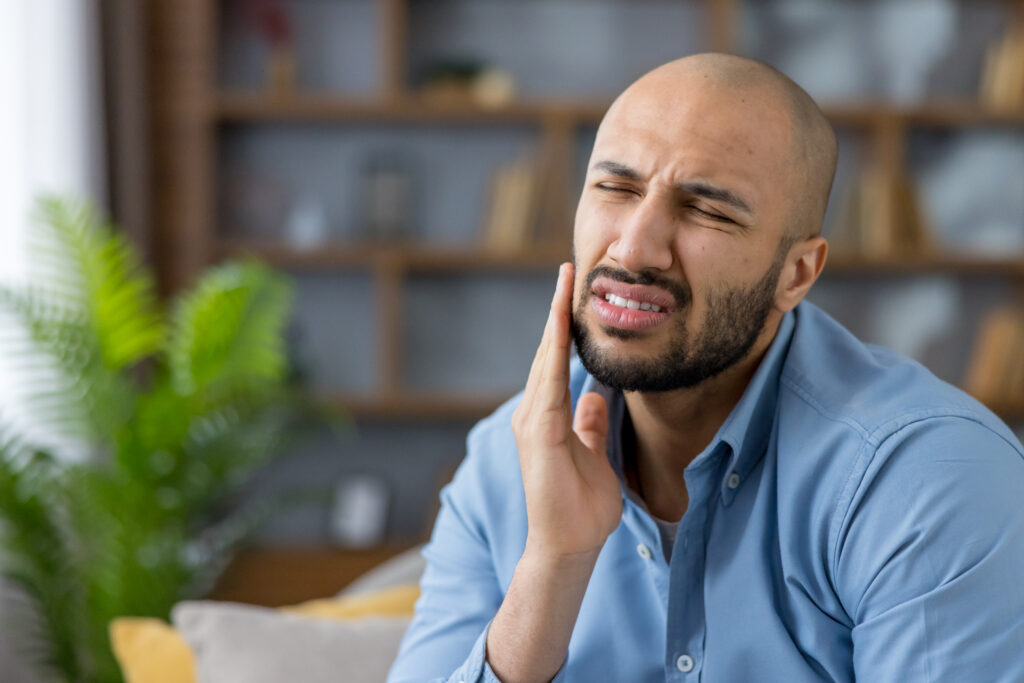
Months or years later, jaw pain begins. Clicking develops. Headaches arrive at the temples and the base of the skull. A dentist identifies TMJ dysfunction and recommends a night guard or a specialist referral. The cervical spine is rarely part of that conversation, because the injury happened in a different chapter — in a different provider's office, long before the jaw symptoms started.
It's important to note that this is not a failure of any individual specialty. Instead, upper cervical care simply focuses on that specific part of the body to restore balance and proper function.
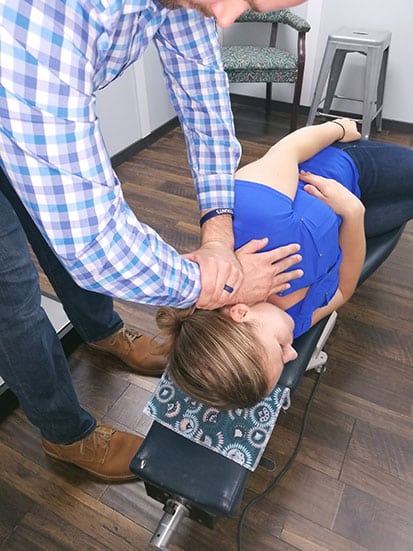
NUCCA chiropractic in Knoxville is a precise, imaging-guided method within upper cervical care, and it is the clinical foundation Drs. Leigh and Connor Davis bring to every patient at Transcend Chiropractic — including those whose primary concern is jaw dysfunction rather than neck pain.
Your first visit begins with a detailed consultation. Drs. Davis take time to understand your full symptom picture — the jaw pain, the clicking, the headaches, the ear symptoms — and then ask specifically about your medical history. Incidents such as falls, car accidents, car collisions and other injuries that seemed to resolve are among the key triggers of postural imbalance, especially on the top section of the spine.
Imaging scans are also performed to assess the precise position of the atlas, and a care plan is built from what the different tests and imaging results reveal.
Patients have come through this process at Transcend Chiropractic from across Knox County. For many of them, the first visit was the first time they learn about upper cervical care and how it can help address problems that have long persisted even after trying so many remedies or treatments.
If you have worn the night guard, completed the jaw exercises, and followed every reasonable recommendation — and the TMJ dysfunction is still there — you are not doing anything wrong. You are simply missing a structural conversation that most providers are not trained to initiate.
Neck injury and TMJ dysfunction share a connection that remains invisible when specialists focus exclusively on the jaw. For patients who have spent years being told their TMJ is a stress issue, a posture issue, or simply something to manage indefinitely, that conversation often feels like the first honest account of what is actually happening in their body.
Transcend Chiropractic serves patients throughout Knoxville and surrounding communities — Farragut, Powell, Maryville, Oak Ridge, Karns, and beyond. Schedule your consultation today.
[ Click here to fill out the consultation request form. ]

1. Can upper cervical care help with both my jaw pain and the ear symptoms that come with it?
Frequently, yes — and the reason is structural. The atlas sits in close proximity to the nerves and tissues that influence both the temporomandibular joint and the inner ear. When atlas compensation is addressed, many patients find that jaw pain lessens alongside ear-related symptoms — fullness, pressure, and tinnitus — because those symptoms often share the same structural source. Our Knoxville chiropractors will look into your health complaints before care begins, including any ear complaints you may have attributed to a separate cause.
2. Can stress make my TMJ symptoms flare up even while I am receiving upper cervical care?
Yes, and Drs. Davis discuss this honestly with every TMJ patient. Stress increases muscle tension throughout the body, including the jaw and surrounding cervical musculature. During demanding seasons — a difficult stretch at work, a significant life transition, the kind of week every Knoxville parent recognizes — those muscles may recruit back into a compensated pattern even as structural correction is being maintained.
Upper cervical care in Knoxville addresses the mechanical foundation, but it does not buffer the physical effects of sustained stress. Managing stress as part of your broader health picture remains genuinely important, and Drs. Davis will talk through what that looks like for your situation specifically.
3. Can I continue seeing my dentist or TMJ specialist while receiving care at Transcend Chiropractic? Absolutely, and in many cases Drs. Davis encourage it. Upper cervical care addresses the structural component of TMJ dysfunction — the atlas and its relationship to the jaw and surrounding musculature. A dentist or oral specialist addresses the dental and occlusal dimensions of the condition.
These are complementary rather than competing approaches, and many Knoxville patients are actively working with dental providers alongside their upper cervical care. Coordination with your other providers is always available when it benefits your overall progress.
4. Why does my jaw pain seem worse on certain days and not others, even when I have not changed anything?
Several overlapping factors are typically at work. Sleep quality, barometric pressure shifts — which Knoxville residents know well through the variable weather rolling in from the Smokies — hydration, sustained screen time, and periods of unconscious clenching during stress can all influence how sensitized the jaw's supporting muscles are on a given day.
When the underlying structural compensation has not been addressed, those muscles are operating near their tolerance threshold. Small variables push them over that threshold on some days and not others. As the structural foundation stabilizes through care, many patients find that symptom volatility decreases alongside overall intensity.
5. How exactly does the atlas affect the temporomandibular joint when it is out of position?
The temporomandibular joint depends on balanced muscular tension on both sides of the jaw to open, close, and track smoothly. The muscles governing jaw movement are influenced by the nerve and structural environment of the upper cervical spine.
When the atlas shifts, the body compensates unevenly — meaning one side of the jaw is pulled with more tension than the other. Over time, that asymmetry places wear on the joint's cartilage and disc, producing clicking, pain, restricted movement, and in some cases locking. The atlas does not contact the jaw directly, but through the compensation pattern it initiates, it shapes how the jaw is loaded with every movement throughout the day.
To schedule a consultation with Transcend Chiropractic, call our Knoxville office at 865-448-7933. You can also click the button below.

If you are outside of the local area you can find an Upper Cervical Doctor near you at www.uppercervicalawareness.com.